Moving Mythology
I want to build a theatre company where mythology is not illustrated like a museum object, but re-entered through movement, character, music, humour, cinema and contemporary questions.
I do not want to place mythology behind glass. I want to ask what happens when it breathes through a contemporary body.
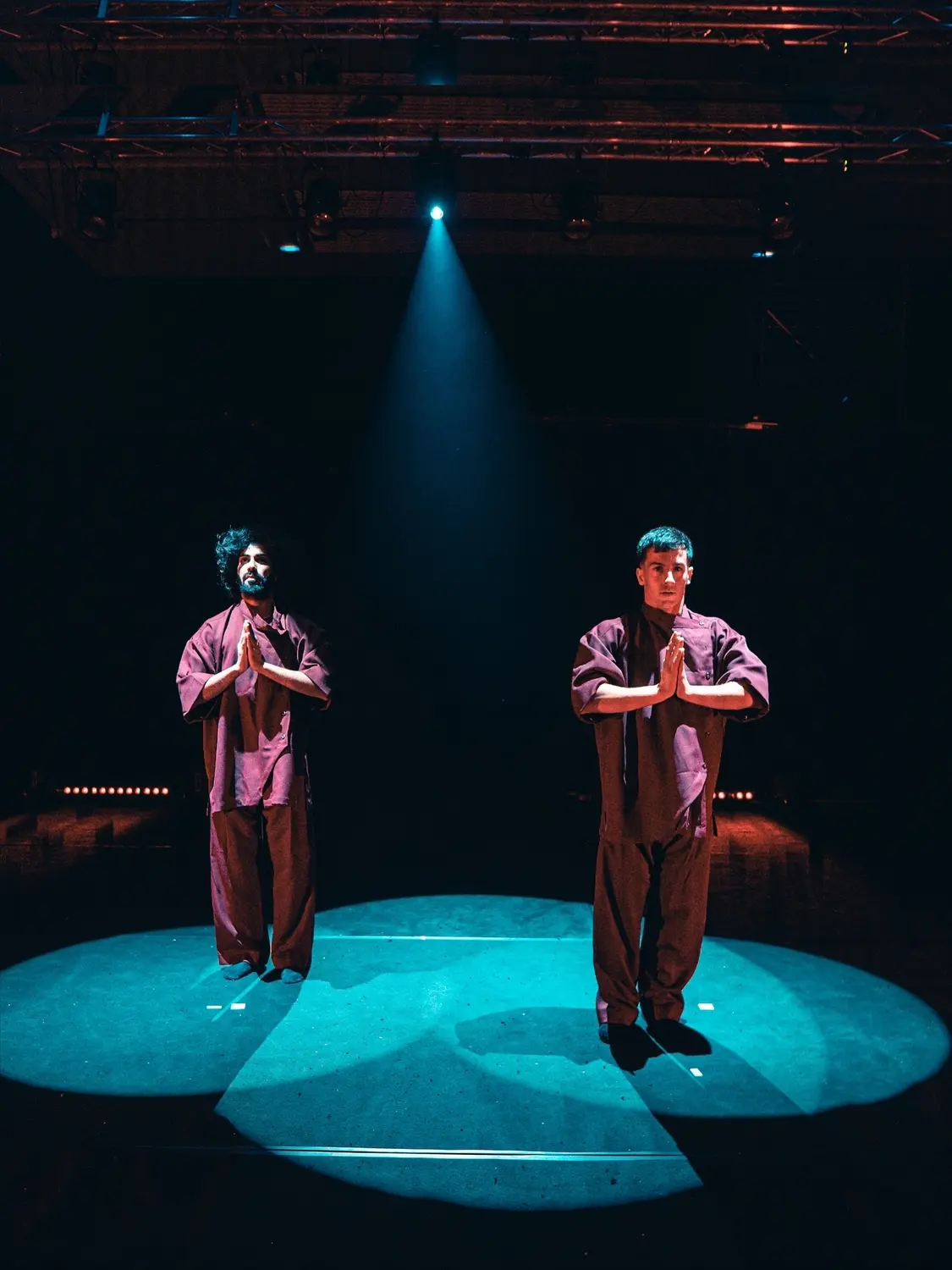
I am beginning to work toward a long-term dream: creating a theatre company in which movement becomes a way of entering mythology. Not simply retelling familiar stories with dance placed between scenes, but building performances where the body itself carries character, conflict, transformation and philosophical questions.
Stories that hold complexity
Indian mythology has never felt like a collection of distant, perfect heroes to me. Its power often lies in complexity: duty competing with desire, wisdom appearing through riddles, gods behaving with recognisable emotion, demons containing intelligence, and ordinary people confronting forces larger than themselves. These stories have survived because every generation can ask them new questions.
Movement can approach mythology differently from literal explanation. A performer can become a forest through rhythm and direction. A conflict between dharma and attachment can appear as two physical impulses pulling one body. A transformation can occur through breath, posture, costume, light and sound before a single word is spoken.
Building living worlds
I am interested in story worlds such as Vikram and Betal, where every tale ends by disturbing certainty with a moral question. I am developing ideas including Chandra Chor and Awakening, and I see my performance project Le Baalak as another part of this journey: it uses movement, narration, humour and spirituality to explore the contemporary artist’s search for purpose. Together, these works are teaching me what kind of company I want to create.
The company would bring together dancers, actors, musicians, visual artists and filmmakers. Projection and cinematic language could expand the stage without replacing the live body. Street-dance intelligence could meet theatre, Indian movement, ritual research and contemporary composition. Spoken language could move between English, Hindi and French when the story requires it.
Creating with responsibility
This work also demands responsibility. Mythology is not raw material without context. Different communities hold different versions, beliefs and sensitivities. I want research, consultation and humility to be part of the creative process. The aim is neither religious preaching nor empty spectacle. It is to create space for wonder, contradiction and reflection.
I imagine performances that can live in theatres, cultural centres, schools and unconventional spaces. Some could be intimate and meditative; others playful and accessible to children and families. Workshops could invite participants to explore archetypes, stories and personal memory through movement rather than only watching from a distance.
This company does not fully exist yet. At the moment, it is a direction made from projects, notes, rehearsals, collaborators and persistent imagination. But many artistic worlds begin this way: first as a question that refuses to leave. Mine is simple to ask and difficult to answer—what can an ancient story reveal when it is allowed to breathe through a contemporary body?